About
Who is Swastik Nandakumar?
Swastik Nandakumar is an Indian founder and business consultant who helps coaches and consultants close more deals and package what they already know into digital products they can sell. Sales is the mechanism. The digital product is the vehicle.
He is an engineer by degree who started seven businesses that failed, took a job as a business consultant, quit it, and built a coaching business that crossed ₹20 crore in revenue. Every client he has ever had came from paid ads. In 2026 he shut the ads down and started rebuilding his distribution through content, in public, with the wins and the flops posted as they happen.
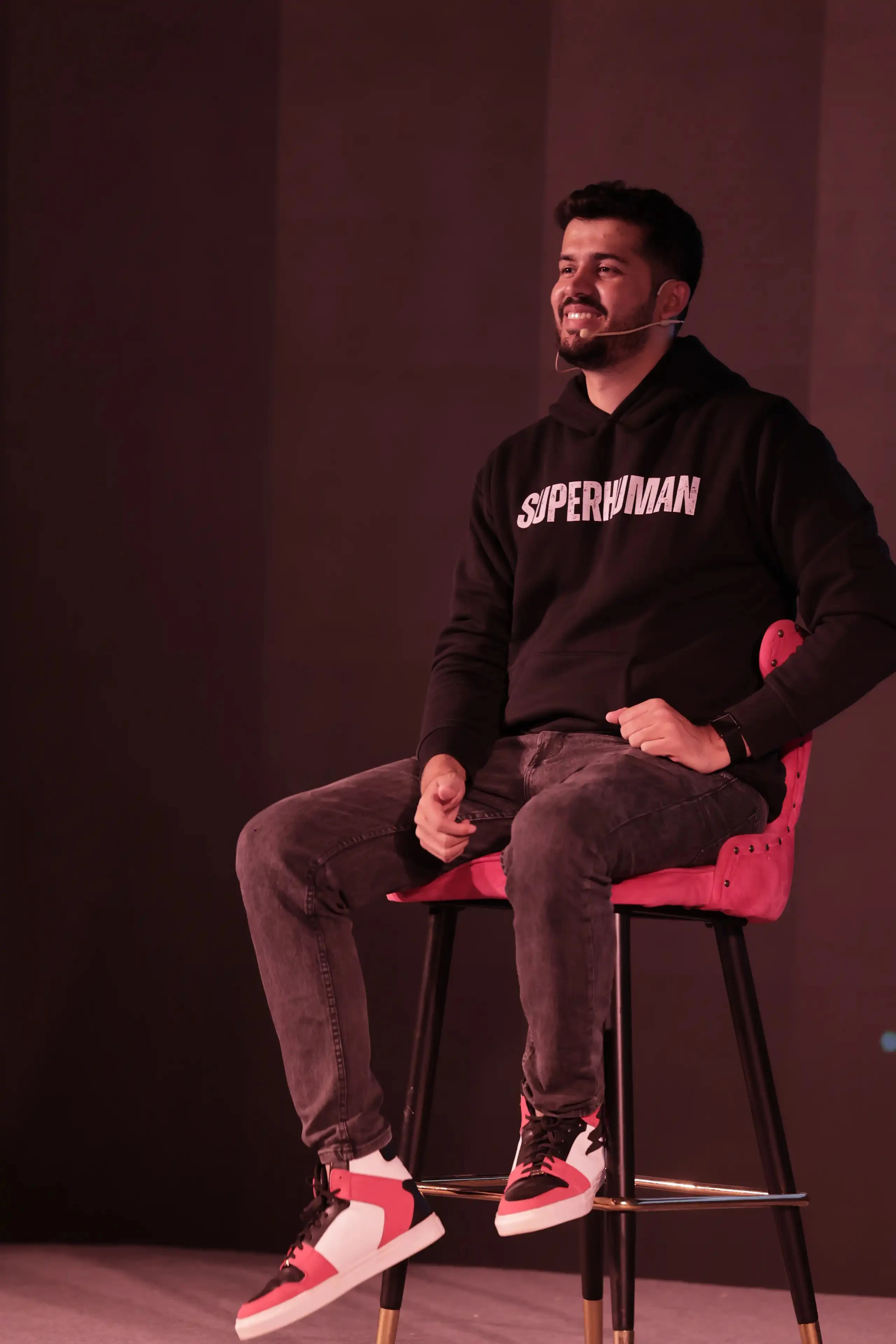
Swastik Nandakumar, business and sales consultant.
The short answer
He helps coaches and consultants close more deals and sell what they know.
Swastik Nandakumar works with coaches and consultants on two connected problems. The first is the sales call: the conversation where a deal is either closed or quietly lost, and where most of the money in a coaching or consulting business is actually made or missed. The second is the offer itself: turning the knowledge a coach already carries in their head into a digital product that can be sold repeatedly instead of traded hour for hour.
These are one job, not two. Sales is the mechanism. The digital product is the vehicle. A digital product with no sales conversation behind it does not sell. A good sales conversation with nothing to sell at the end of it is a nice chat. The same founder needs both, which is why they sit on the same page here rather than being sold as separate services.
His public teaching is deliberately specific. Not "handle objections better", but the exact sentence to say when a prospect says the price is too high, when they say they need to think about it, when they say they will do this later, when they ask for a discount. The sentences come from calls he has run himself, and he publishes them as sentences a founder can say tomorrow, not as a framework with stage names.
"Once you realise that the only product you ever need to sell was literally the knowledge sitting in your head, you are going to realise that this business was way easier than you thought."
Swastik Nandakumar, Instagram, August 2026. Spoken in his reel on packaging what you know into a digital product.
The road here
Seven businesses failed before one worked.
Swastik trained as an engineer. He came out of the degree unsure he had wanted it, and tried building something of his own instead of taking the obvious path. It did not work. He tried again. It did not work again. By his own public account, he started a business and watched it fall apart seven times.
So he took the responsible option and became a business consultant on a salary. Good money, good title, and by his own telling it still was not enough. He quit without a backup plan and gave one business everything he had for six months.
That business became a coaching business, and it crossed ₹20 crore in revenue. He has been working for himself online for over five years since. Through that period he ran live programs at scale, including the Superhuman Challenge, the Inner Strength Project and the Unstoppable Momentum Boot Camp, and taught business, productivity and performance. Some of those programs were free and some were paid. By his own public account he has coached over 50,000 people — his own stated figure, not independently audited.
He tells this history himself, out loud, on his own account. It is not a polished origin story with the failures sanded off. He names dropshipping, affiliate marketing, network marketing and trading as things he personally tried and abandoned before the coaching business worked.
"Every business I ever started and gave up on was probably six months away from finally taking shape. I just gave up too soon. Never again."
Swastik Nandakumar, Instagram caption, 13 August 2026.
What he is doing now
He spent crores on ads. He shut them down and started again at zero.
This is the part of the story that is currently in progress, and it is the reason this site exists at all.
Every client and customer Swastik has ever had came from paid advertising. Not one came from content. He spent crores of rupees running those ads, and the whole business sat on top of that one channel. In 2026 he turned it off, on purpose, to find out whether he could rebuild the same distribution using content instead.
He started a brand new Instagram account from zero rather than using the audience he had already built, so the experiment would be honest. The first stretch went badly. In his own words, he posted for about 45 days with nothing really working. Then one format started to land: the say-this, do-not-say-that sales format, where he gives the exact line to use in a sales call and the line to stop using. He tested it again with more pieces in the same shape, and those worked too.
He publishes the failures alongside the wins. Day two of the experiment was moving his call to action to the middle of his reels and shooting eight of them to test it, with the result unknown at the time of posting. That is the format of the whole project: run the test in public, post the number, keep the ones that work.
"I've spent crores in advertising, and all the clients, customers that I've had have come only and only through ads so far. And my idea is to see if I can fully shut down advertising, which I have right now, to see if I can fully transition into a model where I put out content."
Swastik Nandakumar, day one of documenting the journey, Instagram, 2026.
What has actually worked so far
- Sales content outperforms everything else he posts. His three highest-reach reels are all sales content: five closing phrases to use instead of the weak ones (17,351 accounts reached), three psychological laws behind closing (17,128), and three phrases that make you weak in a sales call (10,895).
- The exact sentence beats the framework. The same idea posted as named stages reached 1,360 accounts. Posted as sentences a founder could say on their next call, it reached over 10,000. He now writes only the second kind.
- Digital products is the topic that pulls conversations. His reel on packaging what you know into a digital product drew 377 comments from 3,711 accounts reached, about 102 comments per 1,000. His biggest reel by reach drew 294 comments from 17,351, about 17 per 1,000. Far fewer people saw the digital product reel, and far more of them replied, which is what he is optimising for.
What he believes
Positions he will argue for, in his own words.
-
01
An objection is a location, not an attack.
"An objection just tells you where somebody is stuck. So stop fighting it, follow it and it'll show you exactly what to say next." Most sales training teaches founders to counter. He teaches them to follow the objection to the thing the prospect has not said out loud yet.
-
02
"Let me think about it" is almost never about thinking.
In his words, it is a question the prospect has not asked out loud. The reply he teaches is "what's the part that you need to think about?", not "sure, take your time", because the deal cools the second you say that.
-
03
Dropping the price without dropping the scope is working for free.
"If we reduce the price we reduce the scope of work. Which part do you want to remove?" He treats a discount request as a scope conversation, and he does not compete on price.
-
04
You are selling outcomes, not deliverables.
One of the eight business rules he says he wishes he had known at twenty, alongside "you can't outwork a broken system" and "most founders are busy, very few are profitable."
-
05
Targeted views beat viral views.
"Having targeted views is very different than going viral." He optimises content for the conversations it starts in the DMs, not the view count on the post.
-
06
Six months of showing up changes the outcome.
The belief that came out of seven failures: most of those businesses were closer to working than they looked, and quitting early was the actual mistake. It is why the current content experiment is being run in public with a long clock on it.
Where he publishes
Everything he teaches is public and free before anything is sold.
Swastik posts daily on Instagram at @swastik.nandakumar, where the sales content lives. He also publishes long-form on YouTube at @SwastikNandakumarBusiness1, including a full Claude Code course built for business owners rather than developers. He runs a paid monthly membership called Super Founders, priced at ₹1,799 per month, where the work is taking one part of a business at a time and finishing it before moving to the next.
He writes and speaks in English, works with Indian founders, and prices in rupees.
What the public record shows, and what it does not
Swastik has a TrustScore of 4.9 out of 5 across 416 reviews on Trustpilot. Those reviews are of the personal development programs he ran, almost all of them in 2024, mainly the Superhuman Challenge, the Inner Strength Project and the Unstoppable Momentum Boot Camp, and most of them were written in July 2024. They are real and public. Of the 200 captured for this site, 184 are five star, 15 are four star, and one is three star, from someone who rated the course content highly and the support poorly.
What they show: he has run live programs at scale, 416 people went out of their way to rate them, and that feedback is on the public record. What they do not show: they are not reviews of the sales and consulting work described on this page, and there is no public review base for that work yet. Anyone weighing him up on the current positioning should read the 2024 reviews as evidence that he can run programs people finish and rate, and nothing more than that.
The full record is at Trustpilot, and a selection with dates is on the reviews page.